SafeNetIoT
The UCL EEE SafeNetIoT Lab pioneers research into securing the Internet of Things (IoT) across critical environments. We identify and analyze vulnerabilities in IoT systems deployed in smart homes, healthcare facilities, and industrial infrastructures. Our work focuses on designing robust security protocols, privacy-preserving architectures, and real-time threat detection mechanisms tailored to constrained IoT ecosystems.
Recent Activity
2 July 2026 - Coseners 2025 (Next Generation Networking and Multi-Service Networks Workshop)
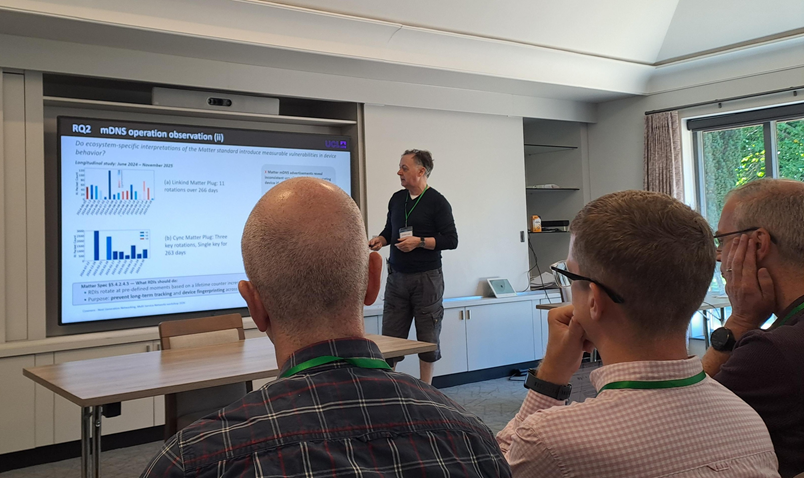
Andrew Losty presented his research detailing developments in the Matter Protocol, and presents the latest research in the Standard’s Security and Privacy at the The 38th Multi-Service Networks workshop(MSN 2026) This annual workshop brings together leading researchers and practitioners to explore cutting-edge developments across networking and communications. Attending provided valuable opportunities to engage with the wider research community and exchange insights on emerging network technologies.
2 July 2026 - CYBERMED (Trust2Wear) Phase 2 Recommended for UCL Innovation Funding
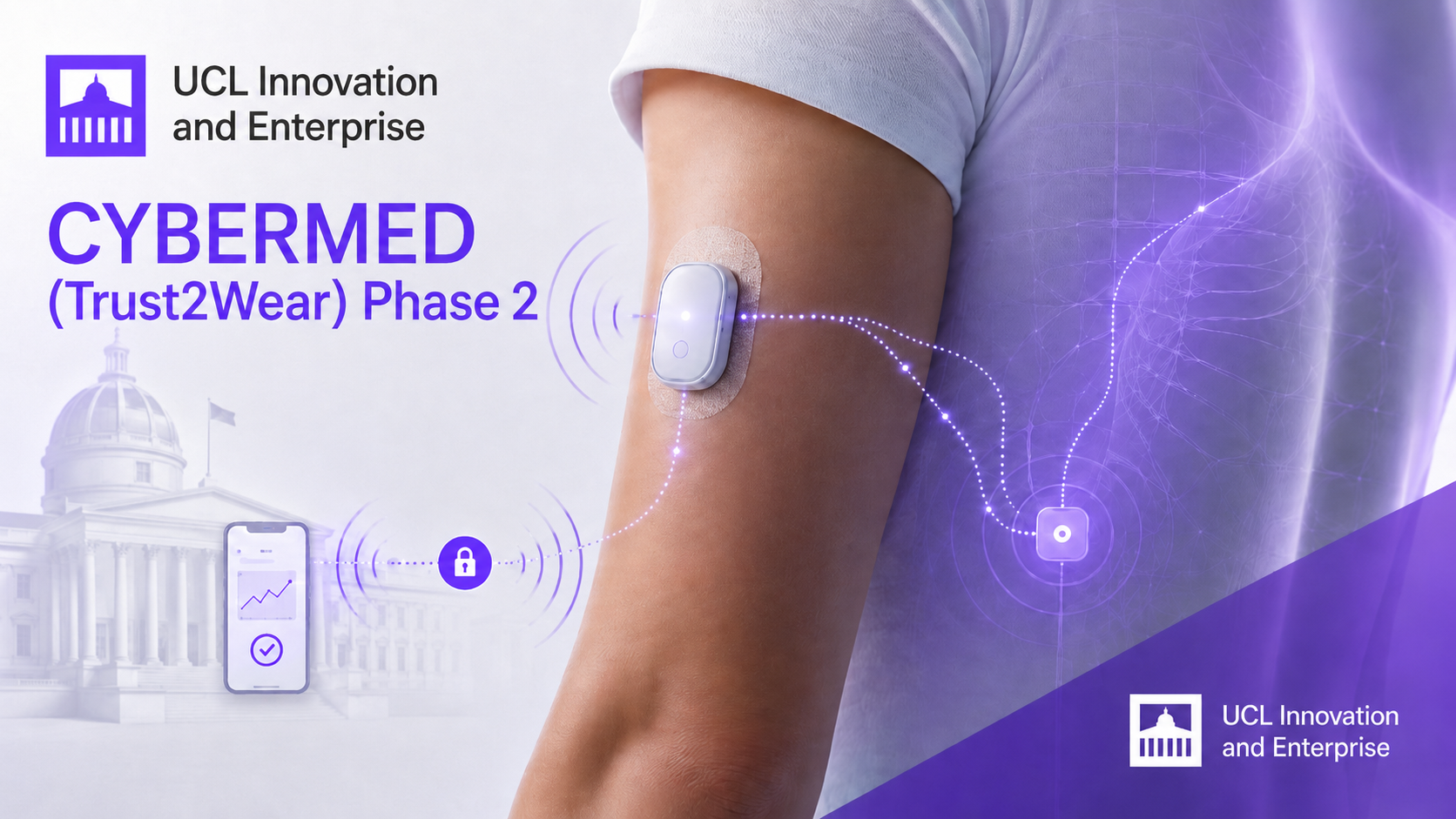
We are pleased to share that CYBERMED (Trust2Wear): Dual-Communication Security for Wearable Medical Devices Using Intra-Body Communication – Phase 2 has been recommended for funding through UCL Innovation & Enterprise’s Knowledge Exchange and Innovation funding scheme. This was a highly competitive funding round, with 108 applications received and only a limited number of projects recommended for support. The project, led by Dr Anna Maria Mandalari with Dr Francesca Boem, Dr Aurelio Loris Canino and Mohammad Alhussan, will support the next stage of CYBERMED (Trust2Wear) development, exploring dual-communication approaches to improve the reliability and security of wearable medical devices using intra-body communication.
10 April 2026 – ICURe Discover Programme – Innovate UK / The Helix Way
Mohammad Alhussan has secured a place on the ICURe Discover Programme, delivered by The Helix Way. The place is funded by Innovate UK and includes up to £2,500 for market discovery activity. The programme supports early-stage research commercialisation through guided customer discovery, training, and venture development activities. Participation in ICURe Discover represents an important milestone in exploring the commercial potential and real-world impact of research emerging from the SafeNetIoT Lab.

People
Anna Maria Mandalari
Anna Maria Mandalari works as Assistant Professor at University College London (UCL). She is affiliated with the Electronic and Electrical Engineering Department, where she is the Director of the SafeNetIoT laboratory and the Director of the Internet Engineering/ Telecommunications MSc/ MRes Programme.
Aurelio Loris Canino
Aurelio is a visiting researcher from Mediterranea University of Reggio Calabria, working on real privacy risks in everyday web browsing.
Research
Hacking Health: Unveiling Vulnerabilities in Wireless Wearable Sensors
Mohammad Alhussan highlights the potential vulnerabilities in wearable medical devices that utilise Bluetooth Low Energy (BLE) for communication. He shows how these attacks can compromise not only the confidentiality and integrity of potentially sensitive medical data transmitted by wearable medical devices, but also patients’ privacy and safety as well as sensors’ reliability
An Investigation of Matter Smart Home Mechanisms to Mitigate Denial-of-Service (DoS) Attacks
Andrew Losty's research examines the relatively new open-source Smart Home automation protocol, Matter. This protocol aims to unify the Smart Home ecosystem, eliminating the need for multiple apps and competing architectures, and is supported by over 270 manufacturers, including major tech leaders such as Amazon, Google, Apple, and Samsung.
Enabling Lawful Interception in Environments Protected by IoT Safeguard
Aurelio Canino's work analyzes a novel challenge: the potential exploitation of IoT devices for covert lawful interceptions, circumventing existing IoT safeguards. In this paper, a system to clandestinely capture audio or video data from IoT devices without an IoT safeguard being able to detect it is defined.
Get in touch
Please do not hesitate to reach out to collaborate etc.